Views: 0 Author: Pretank Marketing Team Publish Time: 2026-05-08 Origin: Site


In modern wineries, cleaning efficiency and hygiene standards are just as important as fermentation performance. Residue buildup, bacterial contamination, and difficult-to-clean corners can directly affect wine quality, production safety, and operating costs.
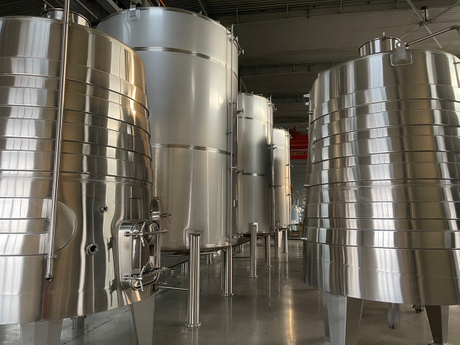
A dead-corner-free stainless steel wine tank design helps wineries achieve faster cleaning, better sanitation, and more reliable production by eliminating areas where residue and microorganisms can accumulate.
As wineries continue to prioritize product consistency and operational efficiency, hygienic tank engineering has become a critical factor in equipment selection.

A dead corner refers to an area inside a tank where liquid flow, cleaning solution, or circulation cannot effectively reach. These hidden zones often trap:
Grape residue
Yeast deposits
Sediment and tartar
Bacteria and microorganisms
Over time, dead corners can lead to contamination risks and increase cleaning difficulty.
Dead-corner-free wine tanks are engineered with:
Smooth internal surfaces
Rounded transitions and welding joints
Optimized outlet structures
Hygienic piping connections
This design allows cleaning liquids to fully circulate throughout the tank during CIP (Clean-in-Place) operations.
Smooth internal surfaces and optimized flow paths allow cleaning agents to cover the entire tank more effectively, reducing cleaning time and water consumption.
This helps wineries:
Increase production uptime
Reduce labor requirements
Improve operational efficiency
Residue trapped in hidden areas can become a breeding ground for bacteria and unwanted microorganisms.
By eliminating dead corners, wineries can maintain:
Better hygiene standards
More stable fermentation conditions
Consistent wine quality across batches
Efficient tank cleaning systems require less detergent, sanitizer, and rinse water.
Benefits include:
Reduced operating costs
Lower wastewater generation
More sustainable winery operations
A hygienic structure makes tanks easier to inspect and maintain, helping operators quickly identify potential issues and reduce downtime.
In addition to structural design, surface treatment plays a crucial role in winery hygiene.
High-quality wine tanks typically undergo:
Acid pickling treatment
Surface passivation
Internal polishing
These processes:
Improve corrosion resistance
Remove welding impurities
Create smoother stainless steel surfaces
Enhance long-term durability
A properly treated surface also prevents residue adhesion, making tanks easier to clean after each production cycle.
Modern stainless steel winery tanks often include:
Food-grade stainless steel materials
Precision laser welding
Mirror or polished internal finishes
CIP spray ball systems
Sanitary valves and fittings
These features help wineries comply with international hygiene standards while improving operational reliability.
As global wine markets become more quality-focused, wineries are placing greater emphasis on:
Product consistency
Food safety standards
Production efficiency
Sustainable operation
Investing in hygienic, dead-corner-free tank systems helps wineries protect wine quality while reducing long-term operational costs.
Prettech specializes in manufacturing stainless steel winery tanks designed for hygienic performance and easy cleaning.
Prettech wine tanks feature:
Dead-corner-free internal structures
Acid pickling and polished surface treatment
CIP-compatible cleaning systems
Customized engineering solutions
With extensive global project experience, Prettech provides reliable fermentation, storage, and blending tank solutions for wineries of all sizes.
Dead-corner-free design is no longer just a premium feature — it has become an essential requirement for modern winery operations. By improving cleaning efficiency, reducing contamination risks, and supporting stable production quality, hygienic tank design delivers long-term value for wineries.
Combined with advanced surface treatment and precision engineering, stainless steel wine tanks help wineries achieve safer, cleaner, and more efficient production processes.