Views: 0 Author: Pretank Marketing Team Publish Time: 2026-06-14 Origin: Site


Among all shell and tube heat exchanger configurations, the floating head heat exchanger is widely recognized as one of the most versatile and reliable designs. It is particularly suitable for applications involving large temperature differences, fouling fluids, and demanding maintenance requirements.
However, like any engineering solution, the floating head design offers both advantages and limitations. Understanding these factors is essential when selecting heat transfer equipment for chemical plants, refineries, power stations, and other industrial facilities.
This guide explores the key advantages and disadvantages of floating head heat exchangers and compares them with alternative exchanger designs.

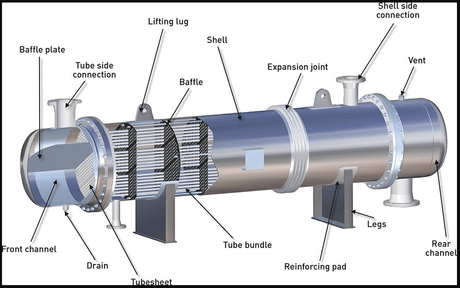
A floating head heat exchanger features one fixed tube sheet and one floating tube sheet. The floating tube sheet is allowed to move freely within the shell, accommodating thermal expansion between the shell and tube bundle.
This unique construction reduces thermal stress and allows the entire tube bundle to be removed for inspection and cleaning.
Because of these characteristics, floating head heat exchangers are frequently used in severe operating environments where maintenance accessibility and reliability are critical.
One of the most significant advantages of a floating head heat exchanger is its ability to accommodate differential thermal expansion.
In industrial processes, shell-side and tube-side fluids often operate at substantially different temperatures. This temperature difference causes metal components to expand at different rates.
The floating head absorbs these dimensional changes, preventing excessive stress on:
Tube sheets
Tubes
Shell structure
Welded joints
As a result, the equipment maintains long-term reliability even under severe thermal cycling conditions.
Unlike fixed tube sheet heat exchangers, floating head designs allow the complete tube bundle to be removed from the shell.
This provides significant advantages during maintenance:
Internal inspection
Mechanical cleaning
Tube replacement
Repair operations
For industries dealing with fouling fluids, this feature can dramatically reduce maintenance time and operating costs.
Many industrial fluids contain contaminants that can accumulate on heat transfer surfaces.
Examples include:
Crude oil
Heavy fuel oil
Slurries
Polymer solutions
Wastewater streams
Because the tube bundle can be removed, fouling deposits can be cleaned more effectively than in many alternative heat exchanger designs.
Thermal stress is one of the primary causes of heat exchanger failure.
By allowing unrestricted thermal expansion, floating head heat exchangers reduce:
Metal fatigue
Tube sheet distortion
Tube leakage
Structural cracking
This contributes to a longer operational lifespan.
Floating head heat exchangers can handle:
High temperatures
High pressures
Frequent temperature fluctuations
Variable process conditions
This flexibility makes them suitable for a wide range of industries.
Maintenance accessibility allows inspections and repairs to be completed more efficiently.
For continuous-process industries, reducing downtime can significantly improve overall plant productivity.
The floating head assembly requires additional components and more complex fabrication procedures.
These components typically include:
Floating tube sheet
Floating head cover
Split backing ring
Specialized sealing arrangements
As a result, initial purchase costs are higher than those of fixed tube sheet heat exchangers.
Compared with simpler exchanger configurations, floating head units contain more parts.
This increased complexity may require:
Additional engineering calculations
More detailed inspection procedures
Skilled maintenance personnel
The tube bundle must be removable for maintenance.
Therefore, adequate clearance space must be provided during installation.
This can be a limitation in facilities with restricted equipment layouts.
Although operating costs may be lower over the equipment lifecycle, the upfront capital investment is typically greater.
Budget-sensitive projects sometimes favor fixed tube sheet designs when operating conditions permit.
The floating head assembly includes additional sealing surfaces.
Improper installation or maintenance can potentially increase the risk of leakage if sealing components are not properly managed.
Floating head heat exchangers are commonly used in industries where maintenance accessibility and thermal flexibility are critical.
Used in:
Crude oil preheaters
Product coolers
Refinery heat recovery systems
Suitable for high-temperature hydrocarbon processing.
Ideal for aggressive process streams and frequent cleaning requirements.
Applied in condensers, feedwater heaters, and auxiliary cooling systems.
Used in demanding offshore environments.
Feature | Floating Head | Fixed Tube Sheet |
|---|---|---|
Thermal Expansion Capability | Excellent | Limited |
Tube Bundle Removal | Yes | No |
Mechanical Cleaning | Easy | More Difficult |
Initial Cost | Higher | Lower |
Maintenance Cost | Lower | Higher |
Fouling Service Suitability | Excellent | Moderate |
Operating Flexibility | High | Medium |
A floating head heat exchanger is often the preferred choice when:
Temperature differences are significant
Process fluids cause fouling
Frequent cleaning is required
Long-term reliability is critical
Maintenance accessibility is important
Although the initial investment may be higher, many industrial operators find that the long-term operational benefits justify the additional cost.
Floating head heat exchangers offer exceptional thermal expansion capability, maintenance accessibility, and operating flexibility. These advantages make them one of the most reliable shell and tube heat exchanger designs for demanding industrial applications.
While they involve higher manufacturing costs and greater design complexity, their long-term performance often delivers substantial value through reduced downtime, easier maintenance, and improved reliability.
Prettech is a professional manufacturer of shell and tube heat exchangers, specializing in floating head heat exchangers, fixed tube sheet heat exchangers, U-tube heat exchangers, condensers, reboilers, and customized thermal solutions for chemical, petrochemical, food processing, pharmaceutical, and energy industries.
With extensive engineering experience and strict quality control, Prettech provides:
✔ Custom-designed heat exchangers
✔ ASME and international standard manufacturing
✔ Stainless steel, carbon steel, duplex stainless steel, titanium, and special alloy options
✔ Technical support and process optimization
✔ Global export experience
Whether you need a standard heat exchanger or a fully customized thermal solution, our engineering team is ready to assist.
Contact Prettech today to discuss your project and request a competitive quotation.