Views: 0 Author: Pretank Marketing Team Publish Time: 2026-03-21 Origin: Site


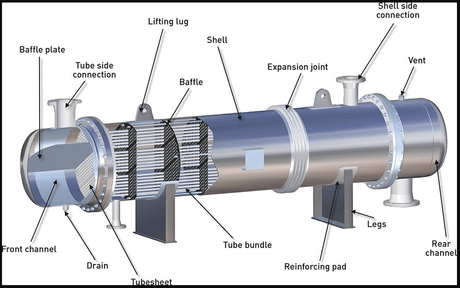
Floating head heat exchangers are widely used in industries such as petrochemicals, marine engineering, and chemical processing due to their ability to accommodate thermal expansion and allow easy maintenance. However, when operating in corrosive environments, material selection becomes a critical factor that directly impacts equipment reliability, safety, and lifecycle cost.
This article explores how to select suitable materials for floating head heat exchangers under corrosive conditions, along with key engineering considerations and practical insights.
In corrosive environments, heat exchangers are exposed to aggressive media such as acids, chlorides, seawater, or high-temperature chemicals. If materials are not properly selected, this can lead to:
Pitting and crevice corrosion
Stress corrosion cracking (SCC)
Leakage and contamination
Increased maintenance frequency and downtime
Therefore, material selection must be based on a clear understanding of fluid composition, operating temperature, pressure conditions, and corrosion mechanisms.
Carbon steel is widely used due to its low cost and good mechanical strength. However, it has poor resistance to most corrosive media and is typically only suitable for non-corrosive or mildly corrosive environments, often requiring coatings or linings for protection.
304 Stainless Steel
Suitable for mild corrosion environments and general industrial applications.
316L Stainless Steel
Offers improved resistance to chlorides and organic acids due to the addition of molybdenum. It is commonly used in:
Seawater systems
Chemical processing
Food and beverage industries
Duplex stainless steels combine high strength with excellent corrosion resistance. Key advantages include:
Superior resistance to pitting and crevice corrosion
High resistance to stress corrosion cracking
Better performance in chloride-rich environments
These materials are widely used in offshore, marine, and aggressive chemical applications.
For more severe corrosive conditions, super austenitic stainless steels provide:
Excellent resistance to strong acids (e.g., sulfuric acid)
Enhanced pitting resistance
Longer service life in high-chloride environments
Nickel-based alloys are suitable for extreme environments, including:
Strong acids (e.g., hydrochloric acid)
High-temperature corrosion
Harsh chemical processing conditions
Although expensive, they offer exceptional durability and reliability.
For the most demanding applications:
Titanium: Outstanding resistance to seawater and chloride corrosion
Zirconium: Excellent resistance to strong acids
These materials are typically used in desalination plants and specialized chemical industries.
Understanding the type of corrosion is essential:
Uniform corrosion
Pitting corrosion
Crevice corrosion
Stress corrosion cracking
Each mechanism requires a different material strategy.
Material selection must match:
Operating temperature
Pressure levels
Fluid velocity (to prevent erosion-corrosion)
Floating head designs are especially suitable for applications with significant temperature differences, as they reduce thermal stress.
While advanced alloys have higher upfront costs, they often reduce:
Maintenance frequency
Downtime losses
Replacement costs
This makes them more economical over the long term.
Some corrosion-resistant materials require strict welding procedures and fabrication control. Poor workmanship can significantly reduce corrosion resistance, even if the material itself is suitable.
| Application | Recommended Material |
|---|---|
| Seawater cooling | 316L / Duplex 2205 |
| Acidic processing | 904L / Hastelloy |
| High chloride + high temperature | Super duplex / Titanium |
| General industrial fluids | 304 / Carbon steel (if non-corrosive) |
Material selection alone is not sufficient to ensure long-term performance. Engineers should also consider:
Corrosion allowance in design
Protective coatings or linings
Cathodic protection systems
Routine inspection and maintenance planning
A comprehensive approach ensures both performance and durability.
Even with the correct material selection, the long-term reliability of a floating head heat exchanger ultimately depends on how well it is engineered and manufactured.
In corrosive environments, small details—such as welding quality, tolerance control, and sealing design—can significantly influence performance. A theoretically suitable material can still fail prematurely if these factors are not properly managed during fabrication.
This is why many engineers prioritize working with manufacturers who not only understand materials, but also have deep experience in process equipment design.
For instance, companies like Prettech focus on delivering fully engineered solutions rather than just standard equipment. With a strong foundation in stainless steel fabrication and industrial process systems, their approach typically involves:
Evaluating actual operating conditions before recommending materials
Optimizing the floating head structure for thermal expansion and maintenance access
Applying proven practices in corrosion-resistant fabrication and welding
Ensuring compliance with international standards such as ASME and TEMA
More importantly, experienced manufacturers tend to think beyond the initial purchase. They consider factors like maintenance cycles, cleaning efficiency, and lifecycle cost—areas that are especially critical in corrosive applications.
From an engineering perspective, the right partner doesn’t just build a heat exchanger—they help reduce risk across the entire operation.
Material selection for floating head heat exchangers in corrosive environments is a complex but essential engineering task. The optimal choice depends on:
Corrosion type and process conditions
Material performance and durability
Lifecycle cost considerations
By combining appropriate material selection with high-quality engineering and manufacturing expertise, industries can significantly improve equipment reliability, reduce maintenance costs, and ensure safe, long-term operation.