Views: 0 Author: Site Editor Publish Time: 2026-03-25 Origin: Site


Floating head heat exchangers are widely used in chemical, petrochemical, marine, and power industries due to their flexibility in handling thermal expansion, ease of maintenance, and high heat transfer efficiency. Unlike fixed-tube heat exchangers, floating head designs allow one end of the tube bundle to expand freely, reducing thermal stress and enabling thorough cleaning. However, achieving optimal performance requires careful thermal design.
This article explores key thermal design considerations for floating head heat exchangers and provides guidance for engineers seeking efficient, reliable operation.
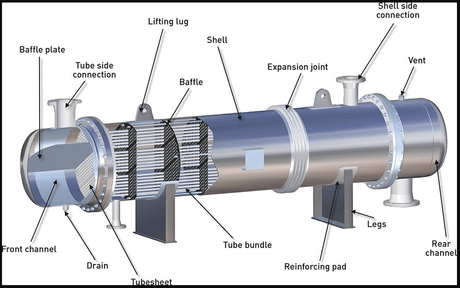
A floating head heat exchanger consists of a tube bundle, a shell, a fixed tube sheet, and a floating tube sheet. The floating head allows the tube bundle to move axially, accommodating thermal expansion caused by temperature differences between the shell-side and tube-side fluids.
Key benefits include:
Reduced thermal stress in high-temperature applications
Improved mechanical reliability under differential expansion
Ease of cleaning and maintenance without disassembling the entire unit
Thermal design aims to ensure:
Adequate heat transfer to meet process requirements
Minimal temperature-induced stress on tubes and shell
Efficient fluid flow for optimal pressure drop and heat exchange
These objectives must balance thermal efficiency, mechanical integrity, and operational reliability.
The temperature difference between the shell-side and tube-side fluids (ΔT) is critical. Excessive ΔT can induce thermal expansion stress, particularly in the tube bundle. Designers must:
Calculate maximum allowable ΔT based on material properties
Ensure tube expansion does not exceed the floating head movement allowance
Consider transient conditions (startup, shutdown, or flow interruptions)
Material choice impacts both thermal conductivity and expansion behavior:
Carbon steel: Suitable for moderate temperatures but limited corrosion resistance
Austenitic stainless steel (304/316L): Good corrosion resistance, moderate thermal expansion
Duplex or high-alloy steels: For high-temperature or aggressive environments
Material selection should align with both thermal and mechanical design criteria.
The overall heat transfer coefficient depends on:
Tube-side and shell-side fluid properties
Fouling factors
Tube layout and diameter
Shell-side baffle design
For high-performance floating head exchangers, crossflow or multi-pass arrangements can enhance U without increasing pressure drop excessively.
Floating head designs allow different temperature profiles along the tube bundle. Correct LMTD calculation must account for:
Counterflow or parallel flow configurations
Multi-pass arrangements
Potential temperature cross between fluids
Fouling can significantly reduce heat transfer efficiency. Designers typically include:
Fouling factors based on process fluid characteristics
Cleaning allowance enabled by floating head accessibility
Corrosion allowance when selecting tube materials
While thermal performance is critical, excessive pressure drop can reduce system efficiency. Designers must:
Optimize tube diameter, pitch, and length
Adjust baffle spacing for shell-side fluid flow
Balance shell-side velocity to avoid vibration and erosion
A floating head exchanger’s multi-pass tube configuration also helps distribute pressure drop evenly.
Floating head heat exchangers are specifically designed to handle axial tube expansion. Key mechanical design considerations include:
Sufficient floating head clearance to accommodate expected ΔL of the tube bundle
Use of bellows or flexible connections if needed
Alignment with tube sheet and shell to prevent bending stress
Consideration of thermal growth in shell, nozzles, and piping
Proper integration of thermal and mechanical design ensures long-term reliability.
Effective thermal design requires understanding the entire process system:
Interaction between heat exchanger and upstream/downstream equipment
Startup/shutdown thermal transients
Variable flow rates and temperature swings
Maintenance accessibility for cleaning and inspection
A well-integrated design minimizes operational risks and improves overall plant efficiency.
Even the most detailed thermal calculations require precise fabrication to be effective. Partnering with an experienced manufacturer ensures:
Proper tube bundle fabrication and alignment
Accurate welding and expansion allowance management
Compliance with international standards (ASME, TEMA, PED)
Guidance on material selection, fouling allowances, and cleaning strategies
Companies like Prettech specialize in custom stainless steel and high-alloy heat exchangers. Their expertise ensures that both thermal and mechanical design requirements are met for reliable, long-term operation in demanding environments.
Thermal design of floating head heat exchangers is a multi-faceted process that combines:
Heat transfer analysis (LMTD, overall U, fouling allowance)
Temperature and thermal stress management
Pressure drop and fluid dynamics optimization
Mechanical design for axial expansion
When these elements are carefully integrated, floating head heat exchangers provide efficient, reliable, and maintainable performance, even under challenging thermal and corrosive conditions.
Partnering with knowledgeable manufacturers ensures that theoretical design translates into real-world operational success, minimizing risk and maximizing system efficiency.
Conatct Prettech
Selecting the right thermal design and materials for a floating head heat exchanger can be complex, especially in corrosive or high-temperature environments. To ensure optimal performance and long-term reliability, it is important to work with a manufacturer who understands both the engineering and fabrication challenges.
If you are evaluating a new floating head heat exchanger or need to optimize an existing system, Prettech’s team of experts can provide guidance on material selection, thermal design, and fabrication best practices. Their experience with stainless steel and high-alloy process equipment ensures solutions tailored to your process requirements.
Contact Prettech today to discuss your project and explore how a well-engineered floating head heat exchanger can improve efficiency, safety, and reliability in your operations.