Views: 0 Author: Pretank Marketing Team Publish Time: 2026-05-13 Origin: Site


Fermentation is one of the most critical stages in winemaking, directly influencing aroma, flavor, color extraction, and overall wine quality. Choosing the right fermentation tank is essential for wineries seeking consistency, efficiency, and product differentiation.
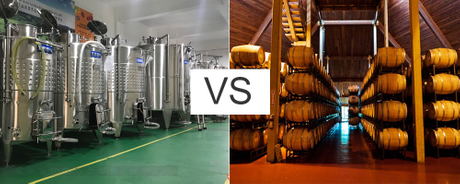
Among the most commonly used systems in modern wineries are open-top fermentation tanks and closed fermentation tanks. Each design offers unique advantages depending on grape variety, wine style, production scale, and operational requirements.
Understanding the differences between these two tank types can help wineries select the most suitable solution for their production goals.

An open-top fermentation tank features an uncovered or partially open upper structure, allowing direct access to the fermentation process.
This type of tank is widely used for:
Red wine fermentation
Small-batch production
Premium and artisanal winemaking
The open structure allows winemakers to manually manage cap punching and monitor fermentation more closely.
Open-top tanks are ideal for red wine production because they improve contact between grape skins and juice during fermentation.
Benefits include:
Enhanced color extraction
Richer tannin structure
Improved aroma complexity
The open design provides direct access for:
Punch-down operations
Cap management
Sampling and inspection
This gives winemakers greater flexibility during fermentation.
Many boutique wineries prefer open-top fermentation because it supports traditional winemaking techniques and smaller production batches.
Despite their advantages, open-top tanks also present certain challenges:
Higher risk of contamination
Greater exposure to oxygen
Increased temperature fluctuation
More labor-intensive operation
Proper hygiene management is especially important for open fermentation systems.
A closed fermentation tank is a sealed system designed to minimize oxygen exposure and maintain controlled fermentation conditions.
Closed tanks are commonly used for:
White wine fermentation
Large-scale commercial wineries
Automated production systems
These tanks are typically equipped with:
Cooling jackets
Pressure control systems
CIP cleaning systems
Automated monitoring devices
The sealed structure reduces exposure to external contaminants, helping wineries maintain stable fermentation conditions.
Closed tanks are easier to integrate with automated cooling systems, ensuring:
Stable fermentation temperature
Consistent product quality
Improved process efficiency
Reducing oxygen exposure helps preserve:
Fresh fruit aromas
Wine stability
Delicate flavor profiles
This is especially important for white wines and aromatic varieties.
Closed systems support automation and CIP cleaning, reducing:
Labor costs
Cleaning time
Production downtime
Closed fermentation systems may offer less flexibility for manual cap management and traditional fermentation techniques. For some premium red wines, wineries may still prefer open-top designs to maximize extraction control.
Feature | Stainless Steel Open-Top Wine fermentation Tank | Stainless Steel Closed Wine Fermentation Tank |
|---|---|---|
Best for | Red wine | White wine / Large-scale production |
Oxygen Exposure | Higher | Lower |
Hygiene Control | Moderate | Excellent |
Automation Compatibility | Lower | Higher |
Manual Access | Excellent | Limited |
Cleaning Efficiency | Moderate | High |
Production Scale | Boutique / Craft | Commercial / Industrial |
The ideal solution depends on several factors:
Wine style and grape variety
Production volume
Desired automation level
Budget and labor availability
Hygiene and process control requirements
Many modern wineries combine both systems to optimize flexibility and production efficiency.
For example:
Open-top tanks for premium red wine fermentation
Closed tanks for white wine and bulk production
Prettech provides customized stainless steel fermentation tanks designed for wineries of all sizes.
Available solutions include:
Open-top fermentation tanks
Closed fermentation tanks
Cooling jacket systems
Pump-over systems
CIP-compatible hygienic designs
With advanced manufacturing capabilities and global winery project experience, Prettech helps wineries improve fermentation performance, hygiene standards, and production efficiency.
Both open-top and closed fermentation tanks offer distinct advantages for modern wineries. Open-top systems provide greater flexibility and extraction performance for premium red wines, while closed systems deliver superior hygiene, temperature control, and production efficiency.
By selecting the right fermentation solution based on production goals and wine style, wineries can improve wine quality, operational efficiency, and long-term production stability.
Open-top fermentation tanks are widely used for premium red wine production due to their superior extraction performance and manual fermentation control. Closed fermentation tanks offer better hygiene, temperature stability, oxidation protection, and automation compatibility, making them ideal for large-scale and white wine production. Prettech provides customized stainless steel fermentation tank solutions tailored to different winery requirements.